Table of Contents
ToggleMost office spaces aren’t exactly flooded with natural light. Between interior cubicles, north-facing windows, and fluorescent overheads, finding plants that’ll survive, let alone thrive, can feel like a losing battle. But here’s the good news: plenty of hardy, attractive plants evolved to grow on forest floors where sunlight barely penetrates the canopy. These low-light champions can handle the dim corners of your workspace without turning brown and crispy. No grow lights, no south-facing windows, no problem. This guide covers the best office plants that don’t need sunlight, plus practical care tips to keep them looking sharp year-round.
Key Takeaways
- Office plants that don’t need sunlight, like snake plants, pothos, and ZZ plants, thrive in low-light environments typical of cubicles and interior office spaces.
- Low-light plants improve indoor air quality by filtering volatile organic compounds (VOCs) and require watering only every 10–14 days, making them ideal for busy workplaces.
- Snake plants release oxygen at night using CAM photosynthesis, while pothos and ZZ plants tolerate weeks of neglect thanks to water storage in their tissue and rhizomes.
- Proper drainage, drying soil between waterings, and a balanced fertilizer every 2–3 months prevent the most common problems: root rot and salt buildup.
- Cluster office plants in groups at varying heights away from heating vents and AC, and position them 5–10 feet from windows or in north-facing spaces for optimal growth without direct sunlight.
Why Choose Low-Light Plants for Your Office?
Low-light plants aren’t just survivors, they’re workhorses. Most of them originated in tropical understories where they adapted to filtered, indirect light. That makes them perfect for offices with limited window access, interior rooms, or spaces lit primarily by LEDs.
Beyond their tolerance for dim conditions, these plants improve indoor air quality by filtering volatile organic compounds (VOCs) from furniture, carpet, and office equipment. NASA’s Clean Air Study identified several common houseplants that remove formaldehyde, benzene, and trichloroethylene from enclosed spaces. While you shouldn’t ditch your HVAC system, a few strategically placed plants can contribute to a healthier workspace.
Low-light varieties also require less frequent watering than sun-loving species. In an office setting where watering schedules get forgotten during busy weeks, that’s a major advantage. Most can go 10–14 days between waterings, and some tolerate neglect even longer. For anyone managing a workspace on a budget, these plants are cost-effective: they’re widely available, inexpensive, and hardy enough that you won’t need replacements every few months.
Best Office Plants That Thrive Without Sunlight
Choosing the right plant comes down to matching the species to your specific light conditions and maintenance habits. The following three are nearly indestructible and well-suited to typical office environments.
Snake Plant (Sansevieria)
Snake plants, also called mother-in-law’s tongue, are tough as nails. They tolerate low light, irregular watering, and a wide range of temperatures (50–85°F). Their upright, sword-shaped leaves grow 2–4 feet tall depending on the variety, making them ideal for floor placement in corners or beside filing cabinets.
Sansevieria uses CAM (Crassulacean Acid Metabolism) photosynthesis, which means it releases oxygen at night instead of during the day. That makes it one of the few plants that actively improves air quality around the clock. Water only when the soil is completely dry, typically every 2–3 weeks. Overwatering is the main killer: root rot sets in fast if the pot sits in standing water. Use a well-draining potting mix (cactus mix works well) and a container with drainage holes.
Snake plants propagate easily from leaf cuttings or by dividing the rhizome, so one plant can become several over time. They’re also pet-safe if kept out of reach, mildly toxic if ingested, but rarely fatal.
Pothos (Epipremnum Aureum)
Pothos is the go-to trailing plant for offices. It handles low light, infrequent watering, and even poor soil quality without complaint. The heart-shaped leaves come in several variegations, golden, marble queen, jade, and neon, though variegated types need slightly more light to maintain their patterns.
This plant works well on top of cabinets, bookshelves, or in hanging planters where the vines can cascade. Stems can grow 6–10 feet long if left unpruned, or you can trim them back to keep the plant compact. Pothos roots easily in water, so propagating new plants from cuttings is straightforward: snip below a node, place in a jar of water, and wait for roots to develop in 1–2 weeks.
Water when the top inch of soil feels dry to the touch, usually once a week in most office climates. Pothos tolerates tap water, but if your municipal supply is heavily chlorinated, let it sit out overnight before watering. Brown leaf tips usually signal overwatering or fluoride sensitivity, which is common in some houseplants that require minimal light.
Note: Pothos is toxic to cats and dogs, so place it out of reach if pets visit your office.
ZZ Plant (Zamioculcas Zamiifolia)
The ZZ plant is as close to unkillable as houseplants get. It stores water in its thick, fleshy rhizomes and glossy leaflets, which means it can survive weeks of neglect. This makes it ideal for offices with irregular schedules or for anyone who travels frequently.
ZZ plants grow 2–3 feet tall with a naturally upright, architectural form. They’re slow growers, which is actually an advantage in small office spaces, you won’t need to repot or prune often. The waxy, dark green leaves reflect light, giving the plant a polished look that fits modern office aesthetics.
Water sparingly, every 2–3 weeks or when the soil is bone dry. Overwatering causes yellowing leaves and root rot. Use a pot with drainage holes and a soil mix designed for succulents or cacti. ZZ plants tolerate low humidity and temperatures between 60–75°F, which aligns with most HVAC settings.
All parts of the ZZ plant contain calcium oxalate crystals, which can cause skin irritation and are toxic if ingested. Wear gloves when handling or repotting, and keep away from children and pets.
Care Tips for Office Plants in Low-Light Conditions
Even low-maintenance plants need a baseline of care. Here’s how to keep them healthy without turning plant care into a part-time job.
Watering schedule: Most low-light plants prefer to dry out between waterings. Stick your finger 1–2 inches into the soil: if it’s dry, water thoroughly until it drains from the bottom of the pot. Empty the drainage tray afterward, standing water leads to root rot. In climate-controlled offices, watering every 10–14 days is typical, but adjust based on pot size, soil type, and humidity.
Soil and drainage: Use a potting mix formulated for indoor plants, which typically contains peat moss, perlite, and bark for aeration. Avoid garden soil, it’s too dense and retains too much moisture. Always use pots with drainage holes. If your planter doesn’t have holes, use it as a decorative cover (called a cachepot) and keep the plant in a nursery pot inside it.
Humidity and temperature: Most low-light plants tolerate average office humidity (30–50%) and temps between 60–75°F. If your office has forced-air heating or AC, keep plants away from direct vents, which can dry out foliage. Grouping plants together raises local humidity slightly, which benefits species like pothos.
Fertilizing: Low-light plants grow slowly, so they don’t need much fertilizer. Use a balanced, water-soluble fertilizer (10-10-10 or 20-20-20 NPK) diluted to half strength once every 2–3 months during spring and summer. Skip fertilizing in fall and winter when growth slows. Over-fertilizing causes salt buildup in the soil, which can burn roots and yellow leaves.
Dusting and cleaning: Dust blocks light absorption and makes photosynthesis less efficient. Wipe leaves with a damp cloth every few weeks, or give the plant a gentle rinse in the sink. Avoid leaf-shine products, they clog pores and attract dust.
Pest management: Indoor plants can develop issues with spider mites, mealybugs, or fungus gnats, especially if overwatered. Inspect plants regularly. If you spot pests, isolate the plant and treat with insecticidal soap or neem oil. For fungus gnats (tiny flies around soil), let the soil dry out completely between waterings and top-dress with a thin layer of sand to discourage egg-laying.
Repotting: Most low-light plants only need repotting every 2–3 years. Signs it’s time: roots growing out of drainage holes, water running straight through without absorbing, or the plant becoming top-heavy. Go up one pot size (2 inches larger in diameter) and refresh the soil. Spring is the best time to repot, when plants enter active growth.
Styling Your Office Space with Low-Light Plants
Placement matters. Low-light doesn’t mean no light, most of these plants still need ambient indoor light to photosynthesize. Avoid closets or rooms with zero windows. North-facing windows, interior offices with overhead LEDs, or spaces 5–10 feet from east- or west-facing windows all work.
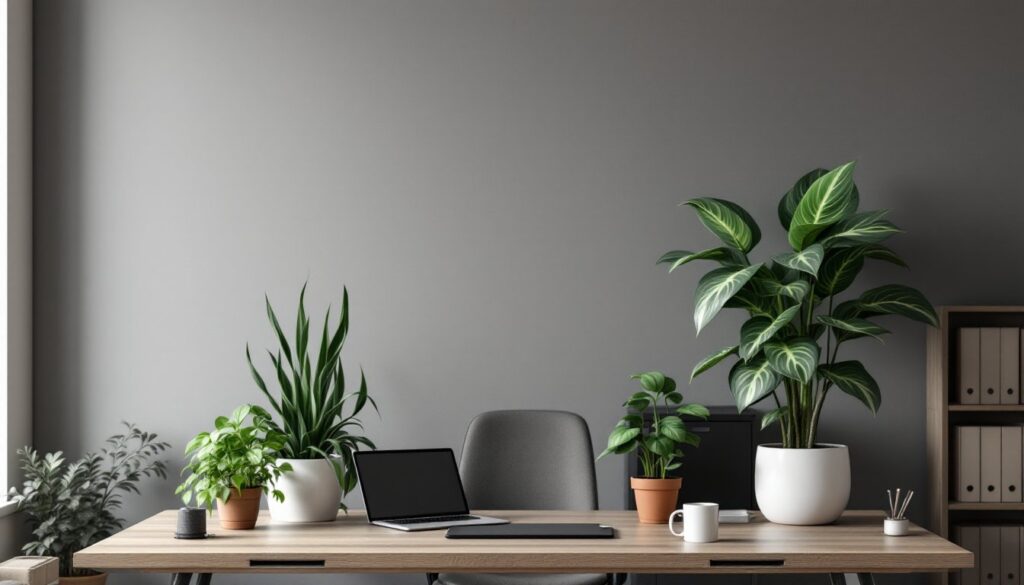
Desktop and shelf placement: Smaller plants like 4–6 inch pothos or snake plants fit on desks, shelves, or credenzas. Use ceramic or terracotta pots with saucers to catch overflow. Elevating plants on books or risers adds visual interest and keeps them off cold surfaces in winter.
Floor plants: Larger specimens (10–12 inch pots) work well on the floor beside furniture or in empty corners. ZZ plants and tall snake plant varieties fill vertical space without taking up much square footage. Use a plant stand or decorative basket to lift them off carpet, which can trap moisture.
Grouping: Cluster plants in odd numbers (3 or 5) for a more natural look. Vary heights and pot styles to avoid a uniform, staged appearance. Mixing trailing plants like pothos with upright types like snake plants creates layers and dimension.
Container choices: Match containers to your office aesthetic, but prioritize function. Terracotta breathes and wicks moisture, which helps prevent overwatering. Ceramic and glazed pots retain moisture longer, so adjust watering frequency. Plastic nursery pots work fine and are easy to swap in and out of decorative covers.
Avoiding common mistakes: Don’t cram plants into tight spaces with zero airflow, stagnant air encourages mold and pests. Keep plants away from heating vents, radiators, and air conditioners. If your office has no natural light at all, consider supplementing with a small LED grow light on a timer (12–14 hours per day). Full-spectrum LEDs are inexpensive and can extend the range of low-light plants suited for darker rooms.
For more ideas on integrating greenery into home and office spaces, The Spruce offers extensive guides on plant care and interior styling. Low-light plants are one of the easiest ways to make an office feel less sterile without ongoing maintenance headaches. Pick the right species, get the watering dialed in, and you’ll have greenery that lasts for years.