Table of Contents
ToggleFinding a home office chair that actually supports a larger frame isn’t about settling for “good enough”, it’s about avoiding daily discomfort, chronic pain, and that sinking feeling when armrests crack mid-Zoom call. Standard office chairs are engineered for an average weight range of 225-250 pounds, leaving many users literally and figuratively unsupported. Whether someone’s setting up a dedicated workspace or upgrading after one too many chair failures, understanding what separates a heavy-duty office chair from a liability is essential. This guide breaks down the engineering, materials, and design features that make a chair genuinely suitable for bigger users.
Key Takeaways
- Standard office chairs are engineered for 225-250 pounds, so an office chair for big people should exceed the user’s weight by at least 50 pounds to prevent mechanical failure and chronic discomfort.
- Look for welded steel frames, reinforced seat pans, and Class 3 or Class 4 gas cylinders rather than thin-gauge materials, as these components directly impact durability under sustained heavy loads.
- Seat width should measure 22-26 inches for larger users with an additional 2-3 inches of clearance behind the knees, and high-density foam (2.0+ lb/ft³) prevents bottoming out and maintains support over time.
- Heavy-duty office chairs come in multiple styles—executive high-back for support, task chairs for upright work, and 24-hour chairs for intensive use—so match the design to your work habits and desk setup.
- A properly rated heavy-duty office chair is an investment in long-term health that prevents component failure, chronic pain, and expensive replacements compared to standard budget alternatives.
Why Standard Office Chairs Don’t Work for Larger Users
Most office chairs sold at big-box stores and online retailers are built to a 250-pound weight capacity. That’s not a suggestion, it’s the maximum load the gas lift cylinder, base, casters, and frame were tested to handle without mechanical failure. Exceed that threshold regularly, and components degrade fast.
The gas cylinder is usually the first casualty. Standard Class 2 cylinders (the pneumatic lift mechanism) aren’t rated for continuous heavy loads. They lose pressure, sink unexpectedly, or in rare cases, catastrophically fail. Class 3 and Class 4 cylinders, found in heavy-duty chairs, use thicker steel walls and higher-grade seals to handle 350-500+ pounds safely.
Frame materials matter just as much. Budget chairs use thin-gauge steel tubing or plastic reinforcements that flex under load. Over time, welds crack, brackets bend, and the seat pan warps. Heavy-duty chairs typically feature welded steel frames with reinforced joints and thicker cross-members to distribute weight without deformation.
Armrests and backrests on standard chairs aren’t built for sustained lateral or reclining pressure. Plastic armrest posts snap. Backrest brackets pull away from seat pans. These aren’t defects, they’re predictable outcomes when components exceed their design tolerances. A chair rated for 300+ pounds uses metal armrest cores, through-bolted backrests, and wider attachment points to prevent stress failures.
Key Features to Look for in Heavy-Duty Office Chairs
Choosing a chair for a larger user isn’t about finding the biggest seat, it’s about matching frame engineering, ergonomic adjustability, and material quality to actual body mechanics and weight distribution.
Weight Capacity and Frame Construction
Weight capacity should exceed the user’s weight by at least 50 pounds for a safety margin. A 300-pound user should target a 350-400 pound rated chair. Manufacturers test to their stated limits, but real-world durability improves with headroom.
Look for welded steel frames rather than bolted assemblies. Welds create continuous load paths: bolted joints concentrate stress and loosen over time. Check that the seat pan (the platform under the cushion) is steel or reinforced composite, not particle board or thin plastic. Particle board compresses and sags: it’s not structural.
The five-star base should be steel or reinforced nylon, not standard nylon. Standard nylon bases are rated to 250 pounds. Heavy-duty bases often measure 27-28 inches in diameter (vs. 24-26 inches on standard chairs) to improve stability and distribute load across more casters.
Casters need higher load ratings too. Look for 3-inch diameter hard or soft casters rated for heavy-duty use. Soft rubber casters work better on hardwood and laminate: hard nylon casters roll easier on carpet. Some heavy-duty chairs use rollerblade-style wheels that spread weight over a larger contact patch.
Seat Width, Depth, and Cushioning
Seat width is the make-or-break spec. Standard office chairs measure 19-21 inches wide between armrests. Big-and-tall models typically offer 22-26 inches of usable seat width. Measure hip width while seated and add 2 inches minimum for comfort. Armrests shouldn’t press into thighs or hips.
Seat depth (front edge to backrest) should allow the user to sit fully back with 2-3 inches of clearance behind the knees. Too shallow, and the backrest becomes useless. Too deep, and it forces forward slouching or cuts off circulation. Many heavy-duty chairs include adjustable seat depth via a sliding mechanism, usually 2-3 inches of travel.
Cushioning density matters more than thickness. High-density foam (2.0+ lb/ft³ rating) resists compression and maintains shape under sustained load. Cheap foam (1.5 lb/ft³ or less) bottoms out in months, leaving users sitting on the hard seat pan. Some premium models use cold-cure molded foam that conforms to body shape without permanent deformation. Memory foam sounds appealing but often traps heat and compresses unevenly in heavy-duty applications.
Look for a waterfall edge on the seat front, a gentle downward curve that reduces pressure on the back of the thighs and improves circulation. Flat or squared-off front edges dig in after a couple hours and cause numbness.
Lumbar support should be adjustable in both height and depth. Fixed lumbar pads rarely align with a larger user’s spine curvature. The best designs use a mechanical lumbar adjustment (knob or lever) that pushes a padded plate forward into the lower back. Inflatable lumbar supports tend to leak or lose firmness over time.
Top Office Chair Styles for Maximum Support and Comfort
Heavy-duty office chairs fall into a few distinct design categories, each with trade-offs in adjustability, materials, and intended use. Choosing the right style depends on work habits, desk setup, and whether the user prioritizes recline, upright task support, or something in between.
Executive high-back chairs dominate the big-and-tall market. They feature tall backrests (26-30 inches), padded armrests, and thick cushioning. Models like the Hermes executive high-back design offer reinforced frames and ergonomic contouring suited for users needing robust lumbar and upper back support. Executive chairs usually include tilt lock and tension adjustment, allowing users to recline and lock at various angles. They’re ideal for users who spend long periods on calls or reviewing documents but less suited for intensive keyboard work, where upright posture is preferable.
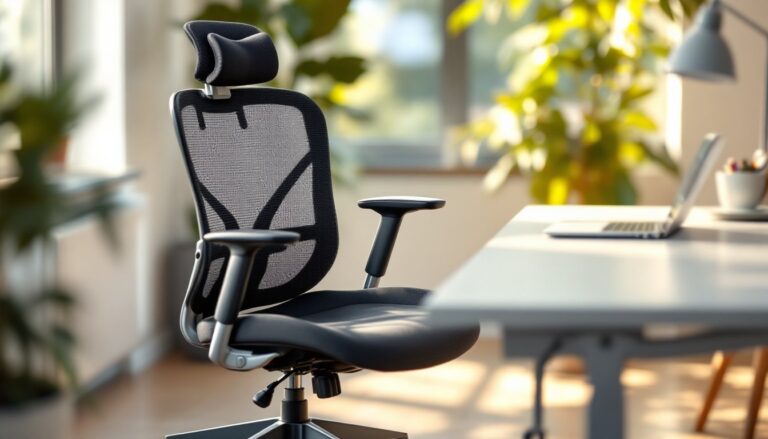
Task chairs prioritize adjustability and upright posture over plush padding. Heavy-duty task chairs typically feature mesh or breathable fabric backs, adjustable lumbar, seat height, armrest height/width, and seat depth. They’re lighter and more mobile than executive models, making them better for active work, coding, design, data entry. The trade-off: less cushioning, narrower recline range, and a more utilitarian appearance. Task chairs work well in compact home offices where mobility and air circulation matter.
24-hour chairs are engineered for continuous use, think call centers, security desks, or anyone working rotating shifts. They use the most durable components: Class 4 gas cylinders, reinforced seat pans, and high-density foam rated for 24/7 operation. These chairs often include synchronized tilt mechanisms that angle the seat and backrest together, reducing spinal pressure during recline. They’re overkill for most home offices but worth considering for users working 10+ hour days or multiple shifts.
Gaming chairs marketed as “big and tall” have entered the heavy-duty space in recent years. They borrow racing seat aesthetics, bolstered sides, integrated headrests, aggressive recline, but quality varies wildly. The better models use steel frames and proper weight ratings: cheaper versions rely on branding over engineering. Gaming chairs suit users who want extreme recline (some go nearly flat) and don’t mind a flashy look. They’re generally bulkier than task chairs and harder to maneuver in tight spaces.
Drafting chairs and stools are underrated for home offices with standing desks or tall workbenches. Heavy-duty drafting chairs include extended gas cylinders (for higher seat heights), footrings, and the same reinforced components as standard big-and-tall models. They allow a perched working position that reduces leg fatigue compared to pure standing. Not a primary chair for most, but a solid option for mixed sit-stand setups.
When comparing styles, consider desk height, monitor placement, and work activities. An executive chair’s high backrest can interfere with monitor arms or wall-mounted shelves. A task chair’s upright posture may feel restrictive for users who prefer a reclined working angle. Test or research recline range, armrest adjustability, and whether the chair fits under the desk when pushed in, clearance issues are common with wider seats.
Conclusion
A properly rated heavy-duty office chair is an investment in daily comfort and long-term health, not a luxury. Skimping on weight capacity or frame quality leads to chronic discomfort, expensive replacements, and potential injury from component failure. Prioritize measurable specs, weight rating, seat dimensions, and frame materials, over marketing claims. Whether someone’s building out a home office or replacing a failing chair, choosing based on engineering rather than appearance pays off in durability and sustained support.