Table of Contents
ToggleA cluttered workspace kills productivity. Papers stack up, files vanish into desk drawers, and every project starts with a ten-minute search for the right folder. An office desk with an integrated filing cabinet solves this problem by combining work surface and storage into one efficient footprint. Whether setting up a home office from scratch or upgrading an overcrowded corner desk, understanding the options helps DIYers and homeowners make smart choices that fit their space, workflow, and budget.
Key Takeaways
- An office desk with filing cabinet combines work surface and storage into one efficient footprint, eliminating the need for separate furniture pieces and freeing up valuable floor space in home offices.
- Integrated filing cabinets improve workflow by keeping documents within arm’s reach, reducing time spent searching for files and enabling faster task transitions.
- L-shaped and side-cabinet configurations adapt to different room layouts, with L-desks maximizing corners and side-mounted units creating symmetrical, professional setups that suit various spatial constraints.
- Proper structural planning is critical: use ¾-inch plywood or solid hardwood for desktop spans under 48 inches, and consider center support legs or steel reinforcement for longer spans to prevent sagging.
- DIY builders should prioritize leveling, wall anchoring with lag screws, and cable management through grommets or under-desk trays to ensure safety, stability, and a professional appearance.
- Desktop attachment methods differ by material—wood cabinets need wood screws through corner brackets, while metal cabinets require self-tapping sheet metal screws or bolt-through connections to distribute load evenly.
Why Choose an Office Desk With Integrated Filing Cabinet
Standalone filing cabinets eat floor space and create awkward gaps between furniture. An integrated filing cabinet tucked beneath or beside a desk streamlines the layout and keeps documents within arm’s reach.
Space efficiency matters most in home offices under 100 square feet. A desk with built-in filing eliminates the need for separate furniture pieces, freeing up room for seating or shelving. Corner and L-shaped configurations maximize wall coverage without blocking pathways.
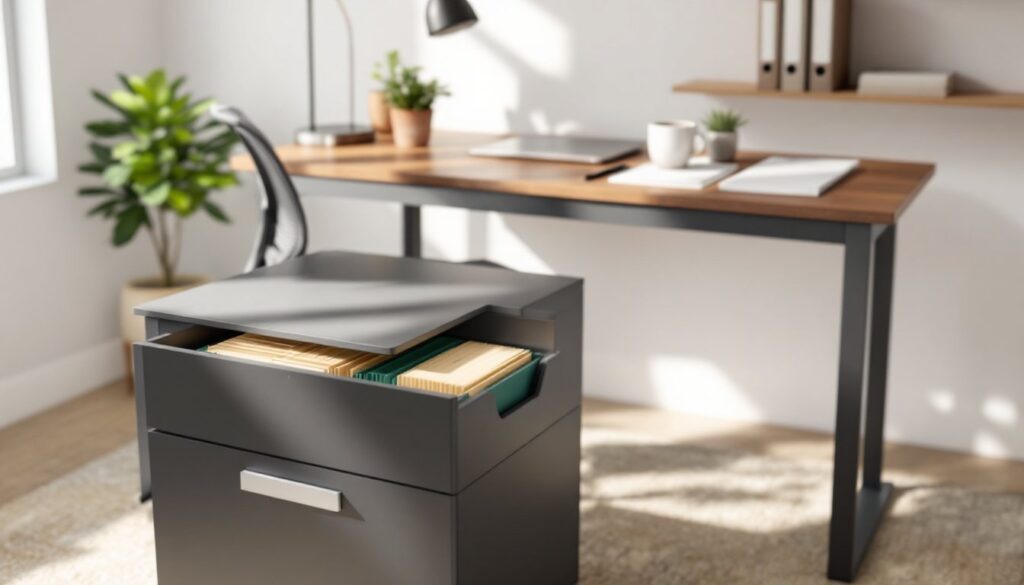
Workflow improvement comes from proximity. Rolling a chair six inches to pull a file beats walking across the room. Pedestal-style filing cabinets slide under the desktop overhang, keeping drawer fronts flush with the desk edge. Side-mounted cabinets work well for frequently accessed files that need visibility.
Cable management improves when filing cabinets anchor desk legs. Many commercial units route power and data cables through the pedestal base, reducing cord clutter. DIY builders can drill 1-inch grommet holes through the cabinet top before assembly to thread cables.
Structural considerations matter for load-bearing. A two-drawer legal-size filing cabinet loaded with files weighs 80–120 pounds. Desktop materials must support this, ¾-inch plywood or MDF works for spans under 48 inches, but solid hardwood or steel frames handle heavier loads and longer spans without sagging.
Types of Office Desks With Filing Cabinets
L-Shaped Desks With Built-In Filing
L-shaped configurations turn corners into productive zones. The return (shorter leg of the L) typically measures 48–60 inches, while the main surface runs 60–72 inches. Filing cabinets mount under either end or at the junction point.
Built-in pedestals sit beneath the main work surface, usually holding two to three drawers. The bottom drawer accommodates letter-size (12 × 9 inches) or legal-size (15 × 9 inches) hanging files. Top drawers store supplies. Look for ball-bearing slides rated for 75–100 pounds, cheaper roller slides bind when fully loaded.
Modular L-desks use separate components: a main desk, return surface, and freestanding filing cabinet that slides into the corner gap. This setup allows replacement of individual pieces and easier moving. Secure the return to the main desk with 2-inch corner braces and #8 wood screws to prevent racking.
Cable routing through L-shaped desks requires planning. Drill grommets where the two surfaces meet, or use snap-in plastic grommets if modifying a finished desk. Run power strips inside the pedestal cavity and mount them to the cabinet interior with double-sided mounting tape.
Computer Desks With Side Filing Cabinets
Side-mount filing cabinets flank the seating area, creating a symmetrical layout. Standard computer desks run 48–60 inches wide: adding a 15-inch filing cabinet on one or both sides extends the footprint to 63–75 inches total.
Mobile pedestals on casters roll under the desk when not in use. Locking casters prevent unwanted movement, critical on hard floors or sloped surfaces. The top surface of a mobile pedestal often doubles as a printer stand or landing zone for active files.
Fixed side cabinets bolt directly to the desk frame or wall. This works well for woodworking enthusiasts building custom office furniture from scratch, as the cabinet provides lateral bracing for longer desk spans. Use 3-inch structural screws through the cabinet side into desk leg supports.
Hutch-and-cabinet combos stack vertical storage above side filing units. This suits offices with limited floor space but available wall height. Anchor hutches to wall studs with 2½-inch lag screws rated for 50 pounds per fastener, fully loaded hutches can exceed 150 pounds.
Depth matching matters for visual cohesion. Standard desks measure 24–30 inches deep, while most filing cabinets run 18–24 inches. Flush-mounting cabinets to the desk front leaves a gap at the back wall but keeps drawer fronts aligned. Flush-mounting to the rear wall creates a small overhang at the front, useful for setting a coffee cup or notepad.
Selecting the Right Size and Configuration for Your Space
Measure the room before shopping. An office desk needs 36 inches of clearance behind the chair for comfortable movement. Add the desk depth (24–30 inches), chair footprint when occupied (24 inches), and walkway clearance to calculate the minimum room depth.
Legal vs. letter filing changes cabinet dimensions. Letter-size cabinets measure 15 inches wide internally, while legal-size units need 18 inches. Most home offices use letter filing unless storing contracts, blueprints, or government documents.
Drawer count affects productivity. Two-drawer units suffice for light paperwork, tax records, manuals, a few project files. Three-drawer cabinets handle active filing systems for freelancers or small business owners. Four-drawer units work for archival storage but require 30 inches of vertical clearance to open the bottom drawer fully.
Desktop height standard sits at 29–30 inches for typing comfort. Adding a filing cabinet as a desk leg locks in this height, adjustability disappears. For users outside the 5’4″–6’0″ range, consider adjustable-height desk frames or build custom legs.
Load calculations matter for DIY builds. A 60-inch desktop spanning two filing cabinets creates a 60-inch unsupported span. Three-quarter-inch plywood sags under monitor weight at this distance. Solutions include:
- Adding a center support leg
- Upgrading to 1-inch hardwood or butcher block
- Installing a steel C-channel along the underside rear edge
- Reducing span to 48 inches maximum
Finish compatibility affects durability in mismatched furniture. Pairing a laminate desk with a wood-veneer filing cabinet works visually but shows wear differently. Laminate resists water rings and scratches: veneer dents easily but refinishes well. Match materials when possible or plan for replacement cycles.
Many DIYers find inspiration and detailed plans on community platforms where builders share dimensions and材料 lists for custom desk builds.
DIY Tips for Maximizing Your Desk and Filing Cabinet Setup
Safety first: Wear safety glasses when drilling into metal cabinets or cutting desktop materials. Use hearing protection for circular saw or router work. A dust mask is essential when sanding MDF or plywood, the fine particles irritate lungs.
Leveling the base prevents drawer binding. Set filing cabinets on a digital level or 24-inch spirit level, shimming with metal washers or furniture levelers until plumb. Even ⅛-inch off-level causes drawer slides to jam over time.
Anchoring to walls matters for safety and stability. Desks over 48 inches wide should attach to at least one wall stud with 2½-inch lag screws and fender washers. This prevents tip-over if someone leans heavily on the desk edge or a child climbs the drawers.
Desktop attachment methods vary by material. For wood or MDF cabinets, drive 1¼-inch wood screws up through internal corner brackets into the desktop underside. For metal cabinets, use self-tapping sheet metal screws or bolt-through connections with washers to distribute load.
Drawer organization multiplies filing capacity. Install hanging file rails (typically 12¾ inches for letter, 15¾ inches for legal) by screwing into pre-drilled holes on drawer sides. Use pendaflex folders with built-in plastic tabs instead of separate metal hangers, they last longer and don’t snag.
Cable management improvements:
- Drill 1-inch to 1½-inch grommets through the desktop back edge, 2 inches from the wall
- Mount a under-desk cable tray to the desktop underside with L-brackets
- Use velcro cable ties instead of zip ties for easier rearranging
- Install a surge protector with mounting holes inside the filing cabinet
Modifying existing furniture saves money over new purchases. Adding a desktop to two mismatched filing cabinets creates a functional desk for under $100. Sand and prime all surfaces before painting to ensure adhesion, skipping primer causes paint to peel within months.
Finishing tips for DIY desktop builds:
- Polyurethane provides water resistance but yellows over time
- Hard wax oil (like Rubio Monocoat) offers low-VOC protection and easy repair
- Laminate edge banding covers raw plywood edges, apply with a household iron on medium heat
Reinforcing long spans prevents sag. A 1×4 apron screwed along the underside front edge adds rigidity to spans over 48 inches. Alternatively, rip a ¾ × 3-inch strip of plywood and glue it perpendicular to the grain along the centerline.
For more project-specific guidance, many woodworking sites offer free plans with cut lists and assembly diagrams tailored to standard filing cabinet dimensions.
Permit considerations: In most jurisdictions, furniture assembly and standalone office setups don’t require permits. But, hardwired electrical work (installing new outlets or relocating circuits) requires a licensed electrician and electrical permit per NEC Article 110. Stick with plug-in solutions to stay code-compliant and avoid inspection requirements.
Conclusion
Choosing the right office desk with filing cabinet boils down to measuring the space, matching the workflow, and understanding load limits. L-shaped desks maximize corners, while side-cabinet configurations suit linear walls. DIYers can build custom solutions or modify existing furniture with basic tools and attention to leveling and anchoring. The result: a workspace that keeps files accessible, surfaces clear, and productivity on track.