Table of Contents
ToggleBringing plants into a home office isn’t just about aesthetics, it’s about creating a space that supports focus, reduces stress, and, according to tradition, invites positive energy. Whether someone’s building out a dedicated workspace or carving out a corner of the living room, the right desk plant can double as a morale booster and a conversation starter. Lucky plants, rooted in feng shui and cultural symbolism, are thought to attract prosperity, health, and good fortune. But beyond superstition, these varieties are also low-maintenance, compact, and forgiving, ideal for a desk setup where space and attention are limited.
Key Takeaways
- Lucky plants for office desks like money trees, lucky bamboo, and jade plants improve air quality, reduce stress, and boost productivity by up to 15% according to research.
- Money trees, lucky bamboo, and jade plants are compact, low-maintenance lucky plants ideal for desk environments that tolerate irregular watering and fluctuating light conditions.
- Proper drainage, consistent water quality (filtered or distilled), and monthly leaf dusting are essential care practices that prevent root rot and maximize your lucky plant’s health.
- Feng shui placement traditions suggest positioning money trees in the wealth corner (far left) or lucky bamboo in the career sector (directly in front) to activate positive energy, though practical lighting needs should take priority.
- Rotate desk plants weekly, fertilize sparingly in spring and summer, and monitor leaf undersides for pests to maintain thriving, attractive office greenery year-round.
Why Lucky Plants Matter in Your Home Office
Home offices need more than ergonomic chairs and good lighting. Indoor plants improve air quality by filtering toxins like formaldehyde and benzene, a benefit backed by NASA research in the 1980s. They also increase humidity, which can ease dry skin and respiratory discomfort, especially in climate-controlled spaces.
From a psychological standpoint, greenery reduces cortisol levels and improves concentration. A study from the University of Exeter found that employees in plant-enriched environments reported a 15% boost in productivity. For remote workers or freelancers, that edge matters.
Lucky plants add another layer: intention. Placing a jade plant or money tree on a desk signals a commitment to growth, both professional and personal. In feng shui, certain plants are believed to activate the wealth corner (southeast) or career sector (north) of a workspace. While these traditions aren’t scientifically proven, the ritual of caring for a living thing, watering, pruning, rotating, creates mindfulness breaks that counterbalance screen fatigue.
Choosing a lucky plant also sidesteps the high-maintenance trap. Most varieties thrive on neglect, tolerate low light, and don’t require constant repotting. For someone juggling Zoom calls and deadlines, that’s a practical win.
Safety note: Some lucky plants, like jade and money tree, are mildly toxic if ingested. Keep them out of reach if pets or young children frequent the office.
Best Lucky Plants to Display on Your Office Desk
Not all lucky plants fit a desk footprint. The following three are compact, symbolic, and forgiving, perfect for a workspace that sees fluctuating light and irregular watering.
Money Tree (Pachira Aquatica)
The money tree features a braided trunk and glossy, palmate leaves that radiate from a central stem. In feng shui, it’s associated with financial abundance and is often placed in the southeast corner of a room or desk. The braided trunk isn’t natural, growers train young saplings into that shape, but it’s become the signature look.
Size and placement: A desk-sized money tree typically stands 12 to 18 inches tall in a 6-inch pot. It needs bright, indirect light, a north- or east-facing window works well. Direct sun scorches the leaves: too little light causes leggy growth.
Watering: Let the top 2 inches of soil dry out between waterings. Overwatering leads to root rot, the most common killer. Use a pot with drainage holes and a saucer to catch runoff.
Humidity: Native to Central and South American swamps, pachira prefers 50–60% humidity. A small desk humidifier helps, or mist the leaves weekly if the office air is dry.
Propagation: Stem cuttings root easily in water. Snip a 6-inch section below a leaf node, remove lower leaves, and submerge the node in a jar of water. Roots develop in 2–4 weeks.
Lucky Bamboo (Dracaena Sanderiana)
Lucky bamboo isn’t bamboo at all, it’s a tropical dracaena. The plant grows in water or soil, making it one of the lowest-maintenance desk options. In Chinese tradition, the number of stalks carries meaning: three for happiness, five for wealth, six for health, and so on. Avoid four stalks, which symbolize death in some cultures.
Container setup: Most people grow lucky bamboo hydroponically in a shallow dish with pebbles or glass marbles to anchor the stalks. Fill with distilled or filtered water, tap water often contains chlorine and fluoride that cause leaf tip burn. Change the water every 2–3 weeks to prevent algae and odor.
Light requirements: Lucky bamboo tolerates low light but grows faster in moderate, indirect light. Keep it away from heating vents and air conditioners, which dry out the leaves.
Soil option: For a more traditional look, plant in well-draining potting mix. Water when the top inch dries out. Soil-grown plants tend to grow taller and bushier.
Yellowing stalks: Once a stalk turns yellow, it’s dying. Cut it at the base and remove it to prevent rot from spreading. Healthy stalks remain green and firm.
Design flexibility: Lucky bamboo stalks can be shaped into spirals, braids, or lattice patterns using wire guides and controlled light exposure, though this takes months. Pre-shaped arrangements are widely available if someone wants an instant statement piece.
Jade Plant (Crassula Ovata)
The jade plant, sometimes called the money plant or friendship tree, is a succulent with thick, oval leaves that resemble jade stones. In feng shui, it’s a symbol of prosperity and is often gifted to new business owners. The plant’s slow growth and tree-like structure give it a bonsai aesthetic without the intensive care.
Pot size: A 4- to 6-inch terracotta pot works well for a desk jade. Terracotta wicks moisture away from roots, reducing the risk of overwatering. Jade plants are top-heavy as they mature, so a wide, shallow pot provides stability.
Watering schedule: Water deeply, then let the soil dry completely, typically every 2–3 weeks in spring and summer, less in winter. Wrinkled leaves signal underwatering: soft, mushy leaves mean overwatering.
Light: Jade plants need 4–6 hours of bright light daily. A south-facing window is ideal. Insufficient light causes etiolation (stretching toward the light source), weakening the plant.
Pruning: Pinch back leggy stems to encourage branching. Use clean, sharp pruning shears or scissors. Jade plants are easy to propagate from leaf or stem cuttings, let the cut end callus for a day, then plant in cactus mix.
Flowering: Mature jade plants (5+ years old) may produce small, star-shaped white or pink flowers in winter if they experience a cool, dry dormancy period. It’s rare indoors but possible with the right conditions.
Toxicity: Jade is toxic to cats and dogs, causing vomiting and lethargy if ingested. Place it on a high shelf or in a pet-free zone.
How to Care for Your Office Desk Lucky Plants
Desk plants face unique challenges: inconsistent light, dry air, and occasional neglect. A few proactive steps keep them thriving.
Drainage is non-negotiable. Every pot needs drainage holes. Cachepots (decorative outer pots) are fine, but don’t let the inner pot sit in standing water. Empty the saucer 30 minutes after watering.
Water quality matters. Chlorine and fluoride in municipal tap water cause brown leaf tips, especially in dracaenas and lucky bamboo. Let tap water sit out overnight to off-gas chlorine, or use filtered/distilled water. Rainwater is ideal if accessible.
Rotate for even growth. Plants grow toward light. Rotate the pot a quarter turn weekly so all sides receive exposure. This prevents lopsided growth and keeps the plant balanced.
Dust the leaves. Dust blocks light absorption and clogs stomata (leaf pores). Wipe leaves monthly with a damp microfiber cloth. For smaller plants, a quick rinse in the sink works, just let them drain before returning to the desk.
Fertilize sparingly. Most lucky plants are slow growers and don’t need heavy feeding. Use a balanced, water-soluble fertilizer (10-10-10 or 5-5-5) diluted to half strength. Apply once in spring and once in summer. Skip fertilizer in fall and winter when growth slows.
Monitor for pests. Spider mites, mealybugs, and scale can hitchhike indoors. Inspect leaf undersides and stems weekly. Treat infestations early with insecticidal soap or a 1:1 mix of water and rubbing alcohol applied with a cotton swab. Isolate affected plants to prevent spread.
Repotting schedule. Most desk plants need repotting every 2–3 years when roots circle the pot’s interior or poke through drainage holes. Choose a pot one size larger (2 inches wider in diameter). Use fresh potting mix appropriate to the plant type, cactus mix for jade, standard houseplant mix for money tree and lucky bamboo.
Acclimate new plants. Office conditions differ from nursery greenhouses. When bringing home a new plant, place it in its permanent spot and avoid moving it for 2 weeks. Expect some leaf drop as it adjusts.
Placement Tips for Maximum Good Fortune
Feng shui practitioners assign specific energy to different desk zones. The wealth corner sits in the far left corner of a desk when facing it. Placing a money tree or jade plant here is thought to activate financial chi. The career sector is directly in front of the seated position, lucky bamboo here symbolizes upward growth.
Practical placement trumps symbolism if light and airflow are poor. A plant that struggles in a dark corner won’t attract anything but root rot. Prioritize natural light access, even if it means adjusting traditional feng shui placement.
Avoid clutter around plants. Stacks of paper, tangled cables, and coffee mugs create stagnant energy. Keep a 6-inch clearance around pots for airflow and easy watering access.
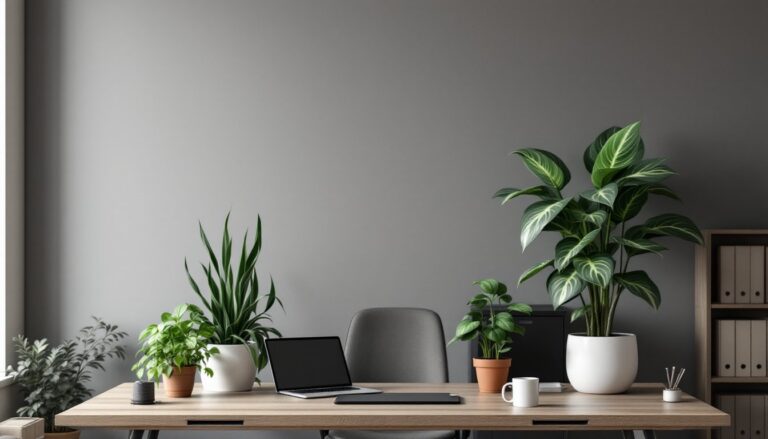
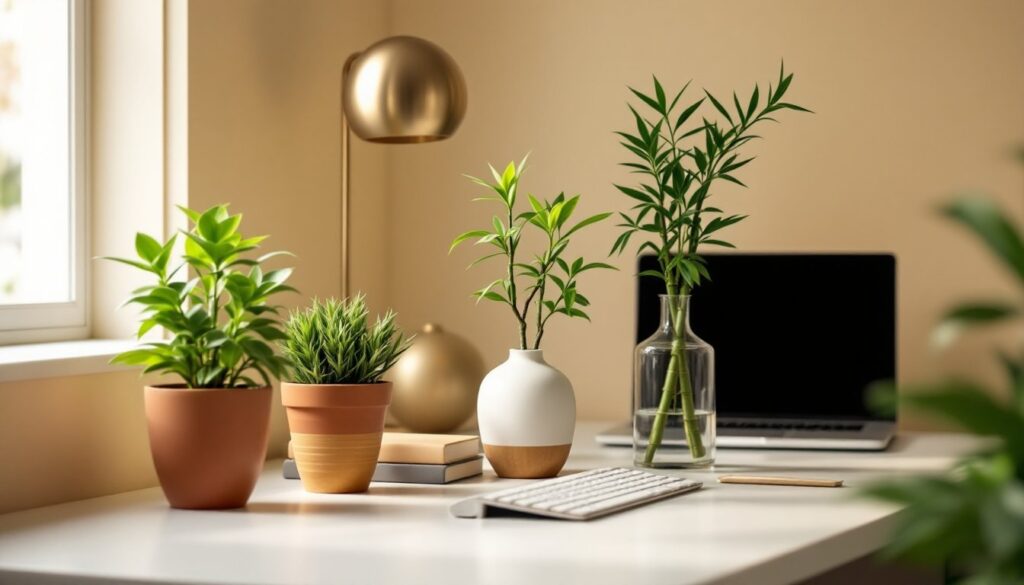
Group plants in odd numbers. Three or five plants create visual balance. Mix heights and textures, a tall lucky bamboo arrangement, a mid-height money tree, and a low jade cluster, for example. Use matching or complementary pots to unify the look.
Consider the backdrop. Plants stand out against neutral walls or light-colored shelving. Dark backgrounds can make greenery recede visually. If the desk faces a wall, a small plant on a floating shelf at eye level adds depth without crowding the work surface.
Ergonomics matter. Don’t sacrifice desk real estate to the point where a keyboard or mouse is cramped. A corner plant stand or wall-mounted shelf frees up surface area while keeping greenery visible.
Some home decor ideas incorporate plants into modular shelving systems that double as workspace organizers. For those interested in broader garden design ideas, extending the office plant collection to adjacent windowsills or floor stands creates a cohesive indoor landscape. Smaller spaces benefit from inspired home design strategies like vertical planters or tiered stands that maximize vertical space.
Seasonal adjustments: In winter, plants near windows may experience cold drafts. Move them 6–12 inches away from glass, or add a sheer curtain to diffuse light and buffer temperature swings. In summer, check soil moisture more frequently, warmer temperatures increase evaporation.