Table of Contents
ToggleUpgrading a home office isn’t just about aesthetics, it’s about creating a workspace that supports focus, comfort, and professional credibility. High end furniture brings together superior materials, ergonomic engineering, and timeless design. Whether someone’s logging Zoom calls five days a week or tackling freelance projects on weekends, the right pieces make a measurable difference in productivity and longevity. This guide breaks down what separates premium office furniture from big-box alternatives, which pieces deliver the most impact, and how to choose furniture that fits both the space and the work style.
Key Takeaways
- High end home office furniture combines superior materials like solid hardwoods and full-grain leather with ergonomic engineering and extended 10–12-year warranties, delivering decades of durability compared to budget alternatives.
- Premium ergonomic chairs with adjustable lumbar support and synchro-tilt mechanisms prevent chronic back pain during long work sessions and often pay for themselves through avoided medical expenses.
- A quality executive desk should measure at least 60 inches wide by 30 inches deep with 1-inch-thick surfaces, full-extension drawer slides, and integrated cable management to support productivity and professional appearances on video calls.
- Solid hardwoods like walnut and white oak develop character over time while maintaining structural integrity, whereas cheap veneer over particleboard delaminates and deteriorates within years.
- Selecting high end furniture requires measuring room dimensions, window placement, electrical outlets, and chair clearances before purchase to ensure pieces fit both the space and workflow needs.
- The long-term investment value of luxury home office furniture becomes clear when calculated cost-per-year, resale potential, and tax deductions are considered alongside the psychological benefits of a professional workspace.
What Defines High End Home Office Furniture?
High end home office furniture isn’t defined by price alone, it’s about craftsmanship, materials, and engineering that outlast cheaper alternatives by decades. Premium pieces use solid hardwoods (walnut, oak, cherry) rather than veneered particleboard, full-grain leather instead of bonded scraps, and joinery techniques like mortise-and-tenon or dovetail construction instead of screws and staples.
Manufacturers in this category often offer customization options: desk dimensions tailored to ceiling heights or room layouts, finish colors matched to existing trim, cable management systems integrated into the design rather than tacked on as an afterthought. Brands like Herman Miller, Knoll, and Restoration Hardware Hardware offer modular systems that adapt as needs change.
Ergonomics play a major role. High end chairs include adjustable lumbar support, seat depth adjustment, and tilt tension control, features that prevent back pain during eight-hour workdays. Desks might incorporate sit-stand mechanisms with programmable height presets, or incorporate drafting angles for architects and designers.
Warranties reflect confidence in durability. Premium office furniture typically carries 10- to 12-year warranties on frames and mechanisms, compared to 1- to 3-year coverage on budget models. That longevity matters when calculating cost per year of use.
Essential Pieces Every Luxury Home Office Needs
Building a functional high end office requires prioritizing pieces that handle daily use and deliver both comfort and visual impact.
Executive Desks That Make a Statement
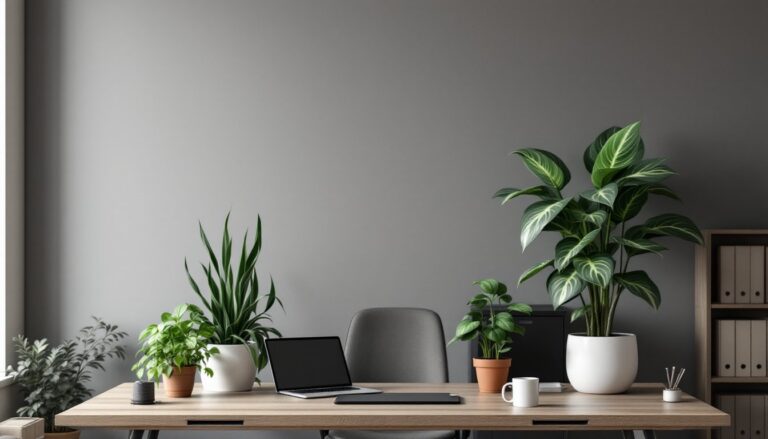
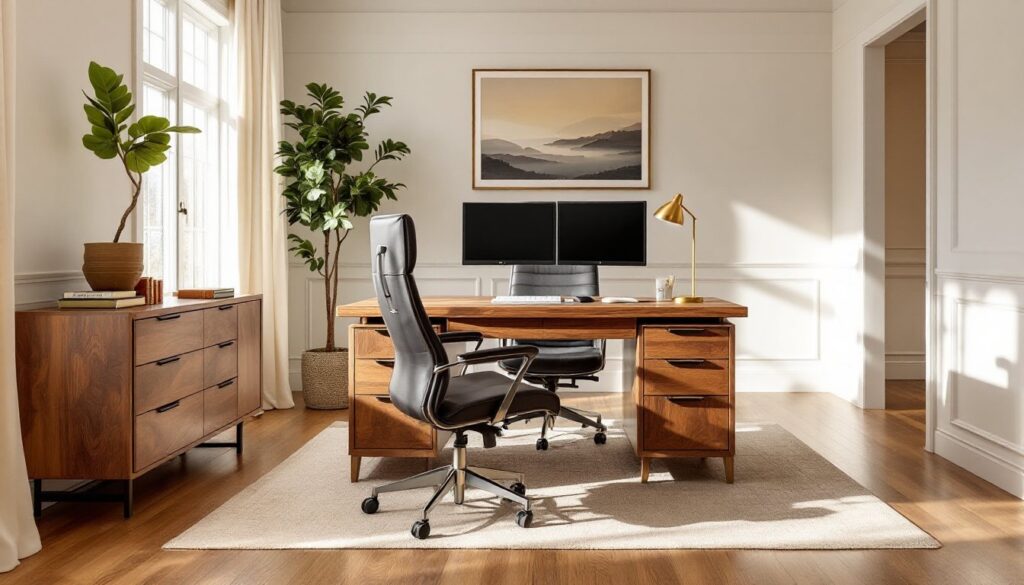
A quality desk anchors the room and defines workflow. For serious work, look for surfaces at least 60 inches wide by 30 inches deep, enough real estate for dual monitors, reference materials, and elbow room. Executive desks in solid walnut or quartersawn white oak bring warmth and grain character that improves with age.
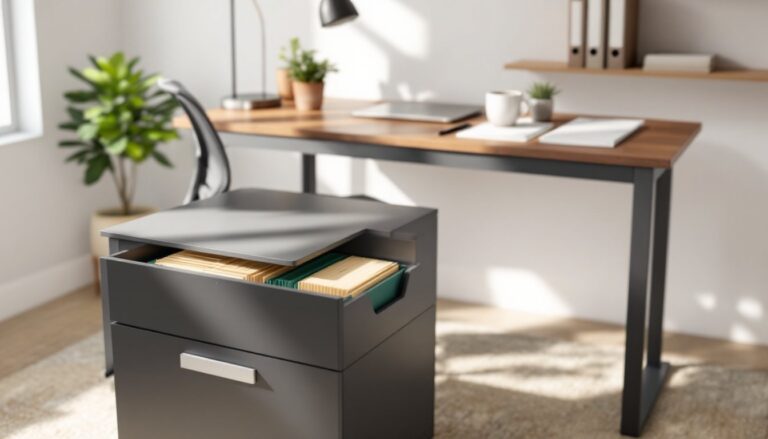
Look for full-extension drawer slides rated for 100+ pounds, soft-close hinges, and file drawers sized for legal or letter hanging files. Top-tier desks often feature leather or felt-lined top drawers to protect eyeglasses and electronics. Built-in power grommets and cable raceways keep cords out of sight, crucial for video calls where the desk background matters.
For smaller spaces, a floating wall-mounted desk in thick wood or stone composite can provide a clean work surface without the visual bulk of a pedestal desk. Pair it with a separate credenza or filing cabinet for storage.
Material thickness matters for stability. Desktop surfaces should be at least 1 inch thick (actual, not nominal) to resist sagging under monitor arms or heavy equipment. Apron-and-leg construction provides better load distribution than a simple slab on sawhorses.
Ergonomic Chairs Built for Comfort and Style
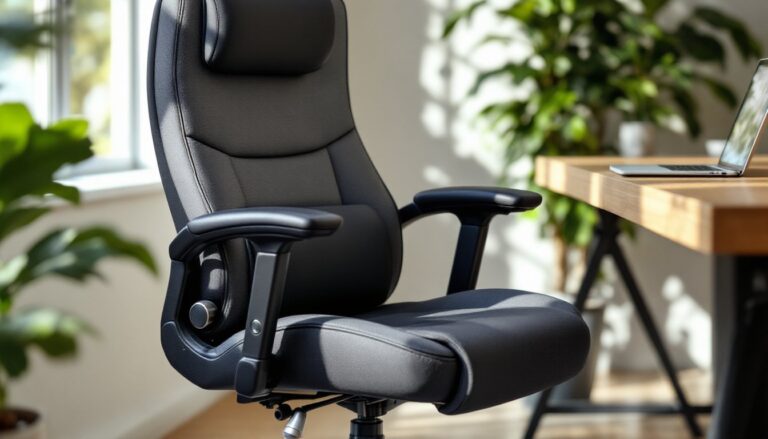
An executive chair is the single most important investment in a home office. Sitting incorrectly for years compounds into chronic pain that no amount of design appeal can justify. High end ergonomic chairs from manufacturers like Steelcase, Herman Miller, or Humanscale support the spine’s natural S-curve with adjustable lumbar depth and height.
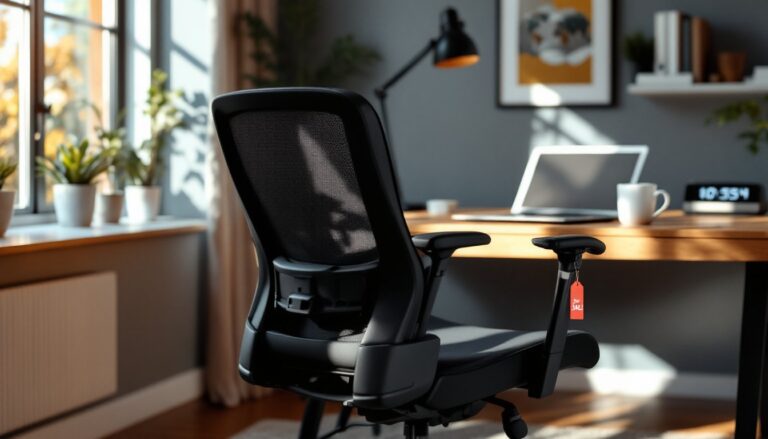
Key features include 4D armrests (adjust in height, width, depth, and angle), synchro-tilt mechanisms that recline the seat and backrest at biomechanically correct ratios, and seat pan depth adjustment to accommodate different leg lengths. Mesh backs promote airflow during long work sessions: leather upholstery suits traditional aesthetics but requires occasional conditioning.
Test the chair’s BIFMA certification (Business and Institutional Furniture Manufacturers Association) for safety and durability standards. Chairs meeting BIFMA standards withstand 250,000+ tilt cycles and support users up to 300 pounds.
For video calls, consider chairs with mid-to-high backs in neutral tones that read well on camera. Avoid bold patterns that distract from the speaker. If the office doubles as a guest room or multipurpose space, look for chairs that complement other furnishings without screaming “corporate.”
Materials and Craftsmanship That Elevate Your Space
The materials in high end furniture telegraph quality before anyone sits down or opens a drawer. Solid hardwoods, especially walnut, white oak, and cherry, gain character as they age, developing patina that improves aesthetics over decades. Walnut offers rich chocolate tones: white oak provides a lighter, modern palette: cherry darkens beautifully with UV exposure.
Veneer isn’t inherently inferior if it’s book-matched (mirror-image grain patterns) and applied over solid wood or high-grade plywood cores. Cheap furniture uses paper-thin veneer over particleboard, which delaminates under humidity changes. Quality veneers run 1/32 to 1/16 inch thick and wrap around edges rather than stopping at flat surfaces.
Metal components should be powder-coated steel or solid brass, not plated zinc alloy that flakes after a year. Drawer pulls and legs in unlacquered brass or oil-rubbed bronze develop an attractive patina. Stainless steel hardware suits modern minimalist spaces but shows fingerprints.
Leather upholstery varies widely in quality. Full-grain leather retains the hide’s natural surface, including subtle imperfections that prove authenticity. Top-grain leather is sanded to remove blemishes, then embossed with an artificial grain, acceptable but less durable. Bonded leather (leather scraps glued to fabric) peels within a few years and doesn’t belong in high end furniture.
Glass or stone desktop inlays add visual interest but require coasters and desk pads to prevent scratching. Tempered glass resists impacts better than standard annealed glass. Some professionals appreciate modern design inspiration when selecting materials that balance function and contemporary aesthetics.
Joinery reveals craftsmanship. Dovetail joints in drawer boxes interlock without relying solely on glue, resisting decades of opening and closing. Mortise-and-tenon joinery in desk legs and frames distributes stress better than butt joints with dowels or screws.
How to Choose High End Furniture for Your Home Office Layout
Selecting furniture starts with measuring the room, not just floor area, but also ceiling height, window placement, and door swing clearance. A massive executive desk overwhelms a 10×10 room: a minimalist floating desk looks lost in a 15×20 space.
Start with the desk position. Place it perpendicular or parallel to windows for natural light without screen glare. Avoid positioning monitors directly in front of windows, backlight washes out video calls and strains eyes. If the room has only one window, position the desk so light comes from the side.
Measure clearances for chair movement. An ergonomic chair needs at least 36 inches behind the desk to roll back and swivel without hitting walls or credenzas. Add another 12–18 inches for standing and walking around the desk.
Consider electrical outlet locations before finalizing furniture placement. High end desks often include integrated power, but they still need to reach wall outlets. Running extension cords across walkways creates tripping hazards and looks sloppy. If outlets are sparse, hire an electrician to add a quad outlet or floor-mounted power box, typically $150–$300 depending on wire runs and local labor rates.
For multi-function spaces, modular furniture systems provide flexibility. A desk with a return (L-shaped configuration) can separate workspace from a reading nook or storage area. Some systems allow adding or removing sections as needs evolve, which matters for homeowners planning to stay in place long term.
Color and finish should harmonize with existing trim, flooring, and built-ins. Dark walnut furniture pairs well with warm-toned oak floors but clashes with cool gray luxury vinyl plank. White oak desks complement Scandinavian or modern farmhouse aesthetics. If the office shares wall space with living areas visible from other rooms, continuity in wood tones prevents visual discord.
Account for storage needs before buying. A desk with two file drawers might suffice for someone who works digitally, but an attorney or accountant managing paper files needs a separate lateral file cabinet. High end filing cabinets in matching wood finishes integrate better than mismatched metal cubes. Homeowners drawn to luxury workspace aesthetics often find cohesive storage solutions elevate the overall design.
Investment Value: Why Quality Home Office Furniture Pays Off
High end furniture carries a higher upfront cost, but the math shifts when calculating cost per year of use. A $3,000 solid walnut desk lasting 30 years costs $100 annually. A $400 particleboard desk replaced every five years costs $80 per year, and generates landfill waste.
Ergonomic chairs prevent medical expenses. According to recent research on workspace design, poorly designed seating contributes to chronic back pain that costs thousands in physical therapy, chiropractic visits, and lost productivity. A $1,200 ergonomic chair that prevents even one round of treatment pays for itself.
Resale value matters for premium brands. Herman Miller Aeron chairs, Eames loungers, and mid-century credenzas hold value on secondary markets. A well-maintained executive desk can sell for 40–60% of its original price after a decade, try that with flat-pack furniture.
Tax deductions apply for home office furniture if the space qualifies under IRS rules (exclusive and regular use for business). Consult a tax professional, but many self-employed workers can depreciate furniture over seven years using MACRS (Modified Accelerated Cost Recovery System), reducing taxable income.
Quality furniture adapts to evolving workspace trends without requiring replacement. A classic walnut desk transitions from a corporate career to retirement hobbies to eventual use by adult children. Timeless design outlasts trends.
Finally, the psychological impact of working in a well-appointed space shouldn’t be discounted. Professionals taking client calls or recording content benefit from backgrounds that convey competence and attention to detail. A thoughtfully designed office signals that someone takes their work seriously, even when that work happens at home. For those exploring comprehensive home office planning, quality furniture forms the foundation of a productive environment.
Safety note: When assembling or moving heavy furniture, use a dolly rated for the load and get help with pieces over 50 pounds. Secure tall bookcases and filing cabinets to wall studs with L-brackets to prevent tip-overs, especially in homes with children or pets. Power tools used for any modifications require safety glasses and hearing protection.