Table of Contents
ToggleFinding the right office chair for a home workspace isn’t just about comfort, it’s about creating a productive environment that fits the room’s aesthetic. Brown office chairs stand out because they bridge professional function with residential warmth. Unlike stark black task chairs or flashy gaming seats, brown tones integrate naturally with wood desks, built-in shelving, and the mixed materials common in home offices. Whether outfitting a converted spare bedroom or a dedicated den, understanding what makes a brown chair work, from upholstery durability to ergonomic adjustments, saves time and prevents buyer’s remorse.
Key Takeaways
- Brown office chairs combine professional function with aesthetic warmth, integrating naturally with wood desks and mixed materials while masking wear better than lighter fabrics.
- Executive leather chairs prioritize comfort and appearance for video calls, while ergonomic task chairs offer adjustability for extended sitting—choose based on your actual work habits.
- Evaluate critical specs like weight capacity, foam density (2.5+ PCF for durability), metal five-point bases, and five-year warranties to avoid premature failure and buyer’s remorse.
- Match your brown office chair to room aesthetics by coordinating wood tones, metal accents, and wall colors, and use lighter brown shades in dim rooms to prevent spaces from feeling dark.
- Extend your brown chair’s lifespan through weekly cleaning, monthly conditioning for leather, quarterly hardware tightening, and proper caster maintenance to preserve both function and appearance.
Why Brown Office Chairs Are a Timeless Choice for Your Home Office
Brown isn’t just a color, it’s a neutral that plays well with nearly every interior palette. Dark walnut desks, light oak shelving, white walls, or gray accent panels all pair cleanly with brown upholstery. The shade masks minor wear better than lighter fabrics, a practical advantage in a space used daily.
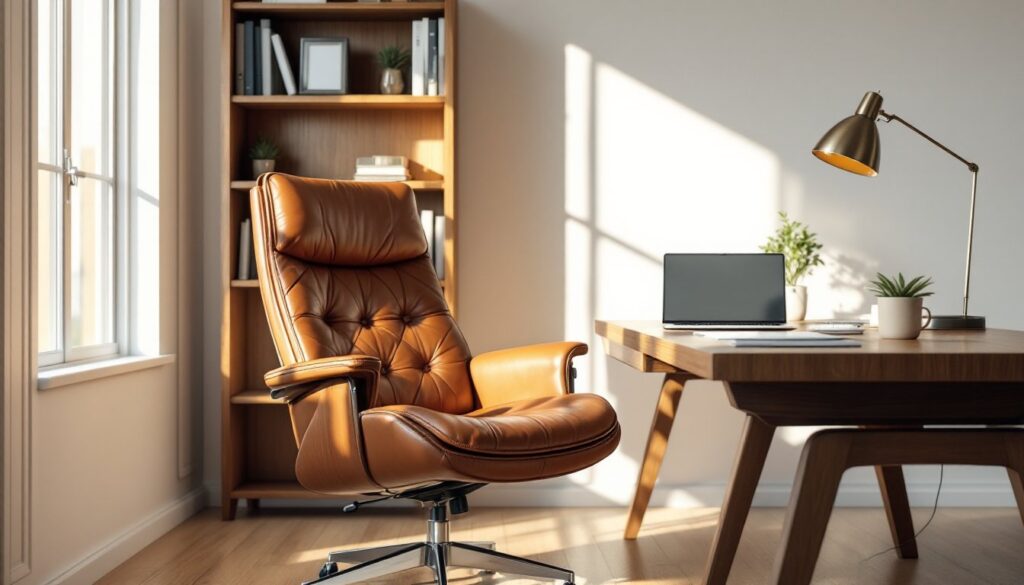
From a design perspective, brown office chairs ground a room without dominating it. They read as intentional rather than default, especially when the chair’s material, leather, faux leather, or fabric, complements existing finishes. A cognac leather executive chair brings warmth to a room with cool-toned walls, while a chocolate fabric task chair softens an all-wood den.
Brown also ages gracefully. Genuine leather develops a patina over years of use, adding character rather than looking shabby. Quality faux leather in brown tones holds up better visually than black alternatives, which can show scuffs and creases more prominently. For homeowners planning to keep furniture long-term, brown offers resilience that lighter colors can’t match.
Another factor: resale and adaptability. Brown chairs transition easily between homes and room layouts. A black gaming chair or bright accent piece might clash with a new space, but brown integrates almost anywhere, making it a safer investment for those who move or redecorate frequently.
Types of Brown Office Chairs: Finding Your Perfect Match
Not all brown chairs serve the same purpose. Matching the chair type to actual work habits, video calls, long typing sessions, sketching, determines whether it becomes a workspace asset or an expensive mistake.
Executive Leather Chairs
Executive chairs feature high backs, generous padding, and often tufted or quilted upholstery. Most use bonded leather, top-grain leather, or PU leather (polyurethane faux leather). Top-grain leather costs more but lasts a decade or longer with proper care. Bonded leather, leather scraps bonded to a backing, degrades faster, often peeling within two to four years.
These chairs suit users who need back support for extended sitting and want a chair that looks substantial on video calls. Typical seat widths run 20–22 inches, with weight capacities between 250–300 pounds for standard models. Check the base: a five-point star base in metal offers better stability than plastic, especially for heavier users.
Executive chairs rarely offer advanced ergonomic adjustments like lumbar depth or seat tilt tension. They prioritize aesthetics and plush comfort over granular customization, making them ideal for shorter work sessions or users without chronic back issues.
Ergonomic Task Chairs
Ergonomic task chairs prioritize adjustability and long-term comfort. Look for adjustable lumbar support (height and depth), seat depth adjustment, armrest height and width settings, and tilt tension control. Brown fabric mesh backs or breathable woven upholstery keep users cooler than solid leather during long stretches.
Seat pan depth matters, 16–18 inches fits most adults, but taller users (over 6 feet) benefit from chairs with seat slider mechanisms that extend depth by 2–3 inches. Shorter users (under 5’4″) should confirm the chair’s minimum seat height drops low enough (typically 16–17 inches from floor) to keep feet flat without a footrest.
Many ergonomic chairs use Class 4 gas lifts rated for 8+ hours of daily use, compared to cheaper Class 2 or Class 3 lifts that sag or fail sooner. This isn’t always advertised, so check manufacturer specs or user reviews mentioning lift durability.
For DIYers interested in chair modifications, some ergonomic models accept aftermarket armrest pads or custom backrests, extending their useful life without replacing the entire unit.
Key Features to Look for When Buying a Brown Office Chair
Buying a chair online or in-store requires evaluating specs that affect daily use, not just appearance in a product photo.
Weight capacity: Most consumer chairs max out at 250–300 pounds. Heavier users should seek models rated for 350+ pounds, which typically include reinforced frames and thicker upholstery foam. Ignoring this leads to premature sagging or frame failure.
Foam density: Seat cushions use foam measured in pounds per cubic foot (PCF). High-density foam (2.5+ PCF) maintains shape for years: low-density foam (1.5 PCF or less) bottoms out within months. Manufacturers rarely advertise PCF, but product descriptions mentioning “cold-cure foam” or “high-resilience foam” generally indicate better quality.
Base and casters: A metal five-point base outlasts plastic. Casters come in two types: hard (for carpet) and soft (for hardwood or tile). Using hard casters on hardwood floors gouges the finish. Soft rubber or polyurethane casters protect flooring, but confirm they fit the chair’s stem diameter (usually 7/16 inch or 11mm).
Armrests: Fixed armrests save cost but force users into one position. 4D armrests, adjustable for height, width, depth, and angle, accommodate different tasks (typing vs. using a mouse vs. reading). If the chair lacks adjustable arms and the user types frequently, fixed arms set too high can cause shoulder strain.
Tilt mechanism: Basic tilt lock lets users recline and lock at one angle. Synchro-tilt mechanisms move the seat and back at different ratios (typically 2:1), reducing pressure on the lower back during recline. Multi-tilt or knee-tilt designs pivot near the front of the seat, keeping feet on the floor during recline, helpful for shorter users.
Warranty: A one-year warranty suggests a budget build. Quality chairs offer five years or more on the frame and mechanism, with two to three years on upholstery and foam. Extended warranties signal the manufacturer expects the chair to last, which correlates with better component quality.
How to Match Your Brown Office Chair with Your Home Office Decor
A brown chair works in most rooms, but coordinating materials and finishes prevents the space from feeling disjointed.
Wood tones: Match the chair’s brown shade to dominant wood in the room. A honey-toned oak desk pairs well with lighter caramel or tan leather, while espresso-stained built-ins call for dark chocolate or cognac upholstery. Mixing warm and cool browns in the same sightline, say, a reddish mahogany desk with a grayish taupe chair, creates visual tension.
Metal accents: Many modern brown chairs include chrome, brushed nickel, or black metal frames. Echo that finish in desk legs, lamp bases, or drawer pulls. Chrome pairs naturally with contemporary spaces: oil-rubbed bronze or matte black suits industrial or farmhouse aesthetics.
Wall color: Brown chairs stand out against cool grays, soft blues, or white walls. In rooms with warm beige or tan walls, a brown chair can blend too much, consider a chair with contrasting stitching or a two-tone design (brown seat with a lighter backrest) to add definition.
Flooring: Light hardwood or pale tile makes dark brown chairs pop. On dark floors, a mid-tone brown avoids a cave-like effect. If the room includes area rugs, ensure the chair’s casters won’t snag loops or fray edges, low-pile rugs (less than 0.5 inches) work best under rolling chairs.
For inspiration on color coordination and contemporary furniture pairings, exploring modern design showcases can reveal how professional spaces balance brown tones with other materials.
Lighting: Brown absorbs light, so rooms with north-facing windows or limited natural light benefit from lighter brown shades (tan, camel) rather than deep espresso. Add task lighting, an adjustable desk lamp with a warm (2700K–3000K) LED bulb, to prevent the workspace from feeling dim.
Maintenance and Care Tips for Brown Office Chairs
Proper maintenance extends a chair’s life and preserves its appearance. Neglect leads to cracked leather, stained fabric, and wobbly mechanisms.
Leather and faux leather:
- Weekly: Wipe with a damp microfiber cloth to remove dust and oils. Avoid soaking, excess moisture damages stitching and seams.
- Monthly: Apply a leather conditioner (for genuine leather) or a vinyl/PU protectant (for faux leather). Work a small amount into the surface with a soft cloth, then buff dry. Conditioning prevents cracking and keeps the material supple.
- Avoid: Household cleaners containing alcohol, bleach, or ammonia. These strip protective coatings and cause discoloration. Never use furniture polish, it leaves residue that attracts dirt.
Fabric upholstery:
- Weekly: Vacuum with an upholstery attachment to remove dust and debris from seams and crevices.
- Spot cleaning: Blot spills immediately with a clean, dry cloth. For stains, mix a drop of mild dish soap with warm water, dab (don’t rub) the area, then blot with a damp cloth to rinse. Test any cleaner on a hidden spot first.
- Deep cleaning: Every six months, use an upholstery shampoo or a steam cleaner if the fabric allows (check the manufacturer’s tag). Mesh backs dry faster than solid fabric.
Mechanisms and hardware:
- Quarterly: Tighten all bolts and screws. Loose hardware causes wobbles and accelerates wear on joints. Use a hex key or Phillips screwdriver as needed.
- Annually: Lubricate the tilt mechanism and gas lift cylinder with silicone spray (not WD-40, which attracts dust). Spray sparingly at pivot points, wipe excess.
Casters: Pull out casters every few months and remove hair or debris wrapped around the wheels. If they stick, a drop of silicone lubricant on the axle restores smooth rolling.
Sun exposure: Leather and fabric fade in direct sunlight. Position the chair away from windows or use UV-blocking blinds. If fading occurs, leather dye kits or fabric paint (matched to the original color) can restore appearance, though results vary.
For those who enjoy hands-on projects, some minor repairs, replacing worn casters, re-gluing loose upholstery, or adding extra padding, fall within DIY scope. But, structural issues like a cracked frame or failed gas lift usually require professional repair or replacement. Always wear safety glasses when disassembling chair mechanisms, as gas lift cylinders contain pressurized nitrogen and can release unexpectedly if damaged.
Finally, consider the environment: many chair components (metal bases, gas lifts, nylon parts) are recyclable if separated. When a chair reaches end-of-life, contact local recycling centers or companies specializing in office furniture recycling rather than sending it to a landfill. Some manufacturers offer take-back programs or refurbishment services, extending the product’s lifecycle and reducing waste.