Table of Contents
ToggleSetting up a home office doesn’t mean you’re stuck with a sterile, all-business layout. Adding a couch transforms a workspace from a one-trick pony into a versatile room where focused work, video calls, brainstorming sessions, and midday reading breaks all have their place. It’s not about bringing lounge culture into work, it’s about building a space that adapts to how people actually work today. A well-planned home office with a couch delivers comfort without sacrificing function, but only if the layout, furniture selection, and space planning are dialed in from the start.
Key Takeaways
- A home office with couch layout creates a versatile workspace that supports focused work, video calls, brainstorming, and relaxation without compromising functionality.
- The L-shaped desk layout with a separate couch lounge area works best for medium to large rooms, maintaining at least 36 inches of clearance to prevent cramping and enable comfortable movement.
- Prioritize seat depth of 20 to 24 inches and firm cushions for proper posture during reading and laptop work, combined with durable performance fabrics or leather that resist stains and daily wear.
- Plan electrical access and lighting zones before arranging furniture—task lighting at the desk, ambient lighting overhead, and accent lighting near the couch improve both productivity and comfort.
- Use a scale floor plan with cut-out furniture templates to test arrangements before committing, ensuring clear traffic flow with minimum 36-inch pathways and adequate space for delivery of larger pieces.
- Modular and sectional furniture options provide adaptability as work habits evolve, allowing you to reconfigure your home office layout without replacing expensive pieces.
Why Include a Couch in Your Home Office Layout?
A couch in the home office isn’t just about aesthetics. It’s a functional addition that supports different working modes throughout the day.
First, it gives the user an alternative work surface. Not every task requires sitting upright at a desk. Reviewing documents, sketching ideas, or taking a phone call often works better in a relaxed posture. A couch provides that option without leaving the workspace.
Second, it makes the room more client-friendly. For consultants, freelancers, or anyone hosting occasional meetings at home, a couch signals professionalism while keeping the setting approachable. It beats cramming two office chairs around a desk.
Third, it improves the room’s utilization. Home offices often sit empty outside work hours. A couch turns the space into a reading nook, a quiet zone away from household noise, or a spot to decompress after a long day. That flexibility justifies the square footage.
Finally, it helps with mental transitions. Standing up and moving to the couch creates a physical break between tasks. It’s a low-effort way to reset focus without leaving the room, especially useful during long, screen-heavy days.
Best Home Office with Couch Layout Ideas
Choosing the right layout depends on room dimensions, door placement, and how the space will be used. These three configurations cover the most common scenarios.
L-Shaped Desk with Couch Lounge Area
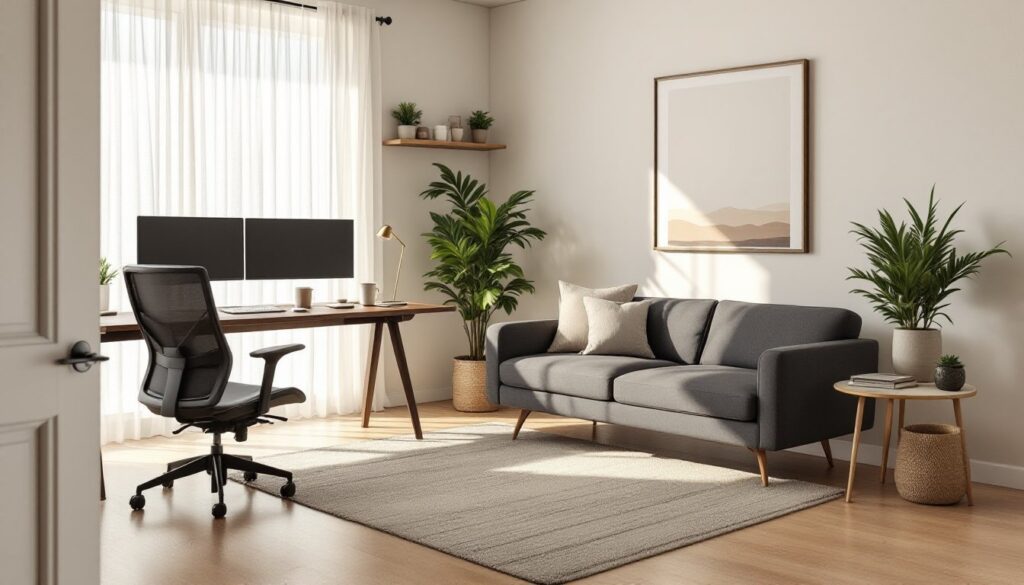
This layout works well in medium to large rooms (10′ × 12′ or bigger). The L-shaped desk anchors one corner, providing ample surface area for monitors, paperwork, and equipment. The couch sits along the opposite wall or perpendicular to the desk, creating a distinct lounge zone.
Position the desk near a window if possible, natural light reduces eye strain and improves mood. If the window is behind the desk, use adjustable blinds to control glare on screens.
Leave at least 36 inches of clearance between the desk and couch to allow comfortable movement. This also prevents the room from feeling cramped. A small side table next to the couch holds a reading lamp, notebook, or coffee cup without cluttering the primary work surface.
This layout shines for those who switch between heads-down computer work and tasks like reading, planning, or taking calls. The physical separation reinforces the mental shift between modes. Many professionals are now integrating upscale furnishings and thoughtful zoning to make these dual-function spaces feel cohesive.
Corner Office with Compact Loveseat
Tight on space? A corner desk paired with a compact loveseat keeps the room functional without overcrowding. Measure carefully, loveseat widths typically range from 52 to 64 inches, compared to 72+ inches for a standard sofa.
Place the desk in the corner farthest from the door to maximize usable floor area near the entrance. The loveseat fits along one wall, ideally opposite or adjacent to the desk. This arrangement keeps the sightline clear and avoids blocking natural light sources.
Use vertical storage to compensate for limited floor space. Wall-mounted shelves, floating cabinets, or a pegboard system keep supplies within reach without eating into the room’s footprint.
This layout suits apartments, converted bedrooms, or attic offices where square footage is at a premium. It’s also a good fit for users who primarily need the couch for occasional breaks rather than extended lounging.
Dual-Purpose Sofa Bed Office Setup
For rooms that double as guest quarters, a sofa bed makes sense. Modern designs have come a long way from clunky futons. Look for models with innerspring or memory foam mattresses and a sturdy frame, cheap mechanisms fail quickly under repeated use.
Position the sofa bed along the longest wall, leaving clearance to fully extend the bed without moving furniture. A desk on wheels or a compact floating desk offers flexibility. When guests arrive, the desk rolls aside or folds down.
Storage becomes critical in dual-purpose rooms. Opt for a desk with drawers to hide work supplies out of sight. A storage ottoman or a console table behind the sofa provides extra space for linens and pillows.
This layout demands compromise. The room won’t feel as dedicated to work as a single-purpose office, but it solves the guest room problem without wasting an entire room. It’s popular in smaller homes where every square foot needs to pull double duty.
How to Choose the Right Couch for Your Home Office
Not every couch works in an office setting. Prioritize these factors over aesthetics alone.
Scale and proportion come first. Measure the room and sketch a floor plan before shopping. A sectional might look great in a showroom but overwhelm a 10′ × 10′ office. Leave at least 24 to 30 inches of walking space on all sides of the couch.
Seat depth and firmness matter more than most people expect. Office couches get used differently than living room sofas. A seat depth of 20 to 24 inches supports good posture for reading or laptop work without forcing the user to slouch. Cushions should be firm enough to sit upright comfortably but not so stiff they feel like outdoor furniture. Many designers featured on interior design platforms recommend testing seating in person before committing, especially for workspaces.
Upholstery durability is critical. Home office furniture sees daily use. Look for performance fabrics or leather. Performance fabrics resist stains, fading, and wear better than standard cotton or linen. Crypton, Sunbrella, and similar treatments add protection without the plasticky feel of vinyl.
Leather (genuine or high-quality faux) holds up well and wipes clean easily, but it can feel cold in winter and sticky in summer without climate control. Darker colors hide wear better than light tones.
Skip anything with loose cushions that need constant fluffing or delicate fabrics that can’t handle a coffee spill.
Armrest height and style affect usability. Low or no arms make it easier to stretch out or use a laptop on the couch. High, padded arms provide a place to rest your elbow during phone calls but take up more space.
Storage features add value in smaller offices. Some couches include built-in drawers or lift-top compartments under the seat. These work well for stashing office supplies, cables, or rarely used equipment.
Finally, consider modular or sectional options for flexibility. Many brands offer pieces that can be rearranged as needs change. A chaise module might make sense now, but swapping it for an armless chair later keeps the layout adaptable.
Space Planning Tips for a Home Office with Couch
Good space planning makes the difference between a functional office and a cluttered mess.
Start with a scale floor plan. Graph paper works fine, use a scale of 1/4 inch = 1 foot. Measure the room’s length, width, and ceiling height. Mark doors (note the swing direction), windows, outlets, and any built-in features like radiators or closets.
Cut out scale templates for the desk, couch, and other furniture. Slide them around on the floor plan until the arrangement works. This saves the hassle of dragging real furniture across the room multiple times.
Electrical access often gets overlooked. Desks need power for computers, monitors, lamps, and chargers. The couch area might need an outlet for a floor lamp or device charging station. If outlets are scarce, plan for surge protectors with adequate cord length. Avoid running cords across walkways, it’s a trip hazard and looks sloppy. Consider having an electrician add outlets if the room is seriously underserved. This work requires a permit in most jurisdictions and must meet NEC (National Electrical Code) standards.
Lighting zones improve functionality. Task lighting (a desk lamp) handles focused work. Ambient lighting (overhead fixture or floor lamp) fills the room. Accent lighting (a reading lamp by the couch) adds flexibility. Each zone should operate independently. Dimmer switches help adjust light levels throughout the day.
Layout changes are part of ongoing workspace optimization, so planning for adaptability from the start saves headaches later.
Traffic flow matters even in a private office. The path from the door to the desk should be clear. Don’t force anyone to squeeze between the couch and a bookcase. A minimum 36-inch clearance for main pathways keeps movement comfortable.
Acoustic treatment is worth considering, especially in rooms with hard flooring and minimal soft furnishings. A couch with upholstered cushions helps absorb sound, but adding a rug under the desk or couch area reduces echo during video calls. Heavy curtains or fabric wall panels provide additional sound dampening without major construction.
Climate control affects comfort year-round. If the office has its own thermostat, great. If not, check that HVAC vents adequately reach the space. A ceiling fan improves air circulation and comfort without cranking the AC. Portable space heaters or fans work in a pinch but shouldn’t be the permanent solution.
Storage placement should support workflow. Frequently used items (notebooks, pens, chargers) belong within arm’s reach of the desk. Reference materials or archives can live farther away, on shelves behind the couch or in a closet. The couch area might include a small bookshelf or console table for casual reading materials.
Space planning also means thinking about how furniture will get into the room. Measure doorways and hallways. A sectional that doesn’t fit through a 30-inch door won’t magically shrink. Modular furniture or pieces with removable legs offer more flexibility during delivery.
Finally, leave room for adjustment. Layouts evolve as work habits change. Avoid built-ins or permanent fixtures unless absolutely necessary. Freestanding furniture, adjustable shelving, and modular pieces make it easier to tweak the space down the road.